RESED on Dialnet
2026-02-11
Measurements in Dialnet
Read more about RESED on Dialnet

RESED (ISSN 2341-3255) is an open-access digital scientific journal published by the University of Cádiz Publications Service. The publication focusses mainly on: studies covering social issues, debates with an impact on education today, and the social role played by education and teachers in today's society. In addition to bringing together teaching, research and innovation in educational issues, the journal aims to create a space where teachers and students who are engaged in, and learning about, the profession may come together and promote the construction of academic and practical arguments on the aforementioned issues from a mainly sociological perspective.
RESED is open to any member of the scientific and educational community who wishes to publish. The journal is committed to the use of non-sexist language. Plagiarism detection analyses are carried out. To this end, and in order to detect plagiarism, evaluators, editors and coordinators of monographs (in the event a monograph is published) will check the concordance and correspondence of the authors' contributions as well as the bibliographical references used.
The names and e-mail addresses entered in the journal will be used exclusively for the purposes stated within and will not be made available for any other purpose or to a third party.
RESED is licensed under a Creative Commons Attribution-Non-commercial 4.0 International licence. It is an open access publication allowing for dissemination and use of the work as long as the authorship of the article or contribution is specified, and it is not used for commercial purposes.
DOI: http://dx.doi.org/10.25267/Rev_estud_socioeducativos

Measurements in Dialnet
Read more about RESED on Dialnet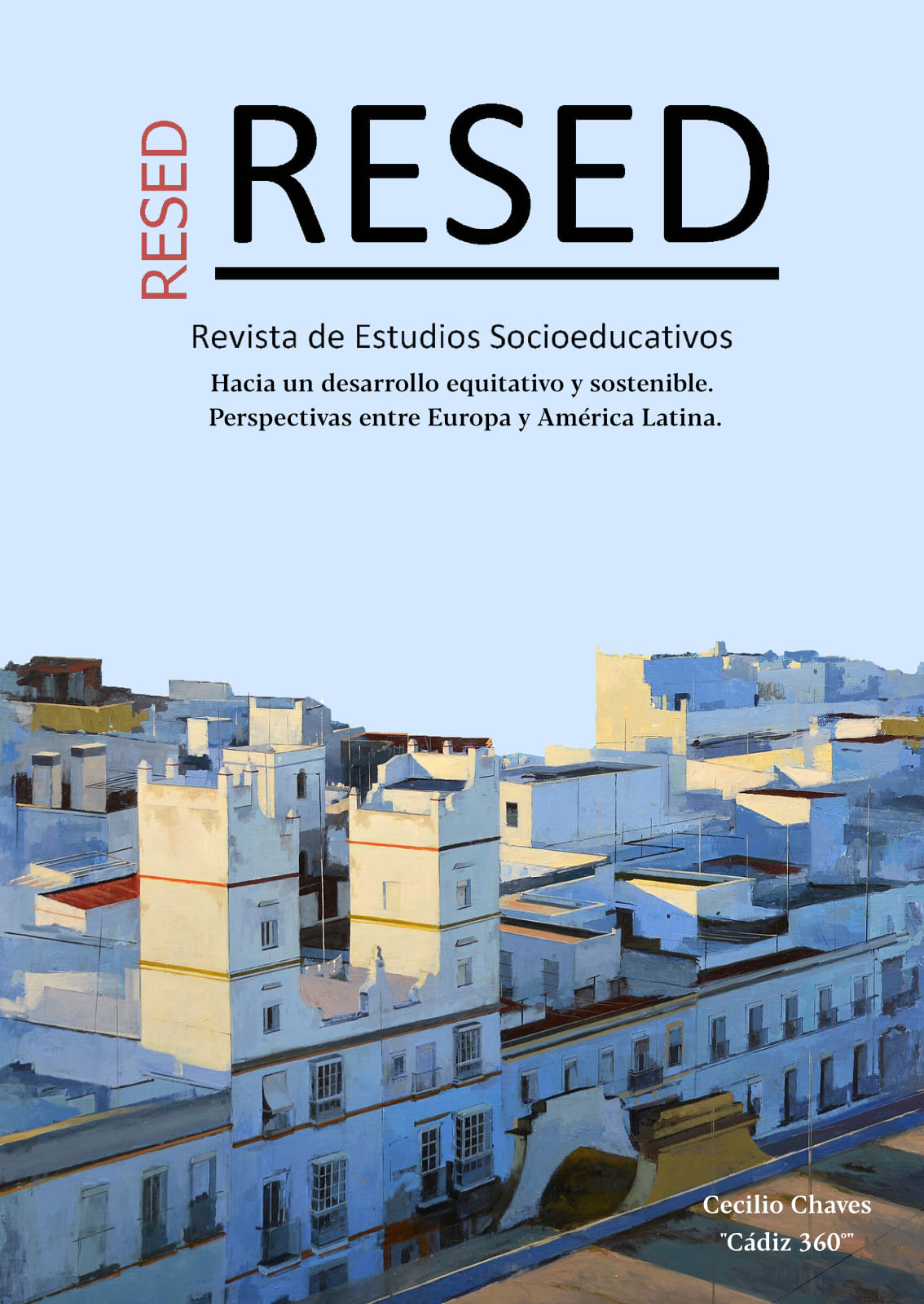
COORDINATION: Juan Carlos Solano Lucas
This monograph represents an opportunity to foster academic exchange and interdisciplinary research within the field of sociology and the social sciences as a whole. The topic is of vital importance in an increasingly globalized and diverse world, where territorial integration policies play a central role in promoting social cohesion, sustainable development, and equity.
In the specific case of Latin America and Europe, both territories share significant challenges. These regions face issues such as economic and social disparities between urban and rural areas, sustainable management of natural resources, public policy, urban planning, and regional development, among others. Understanding how these challenges are addressed in each context—and what lessons can be learned from one another—is crucial for advancing toward more effective and just solutions.
No. 13/ 2025 (MONOGRAPH) MONOGRAPH No. 13: Toward Equitable and Sustainable Development. Perspectives between Europe and Latin America
DIRECTOR: A-Beatriz Pérez-González
MONOGRAPH COORDINATION: Juan Carlos Solano Lucas
COVER ART: (Cover arrangements) Javier Montero Pérez Created with the image "360º Cádiz" by Cecilio Chaves
TECHNICAL SUPPORT: César Tolgyesi Fernández
© RESED ISSN: 2341-32